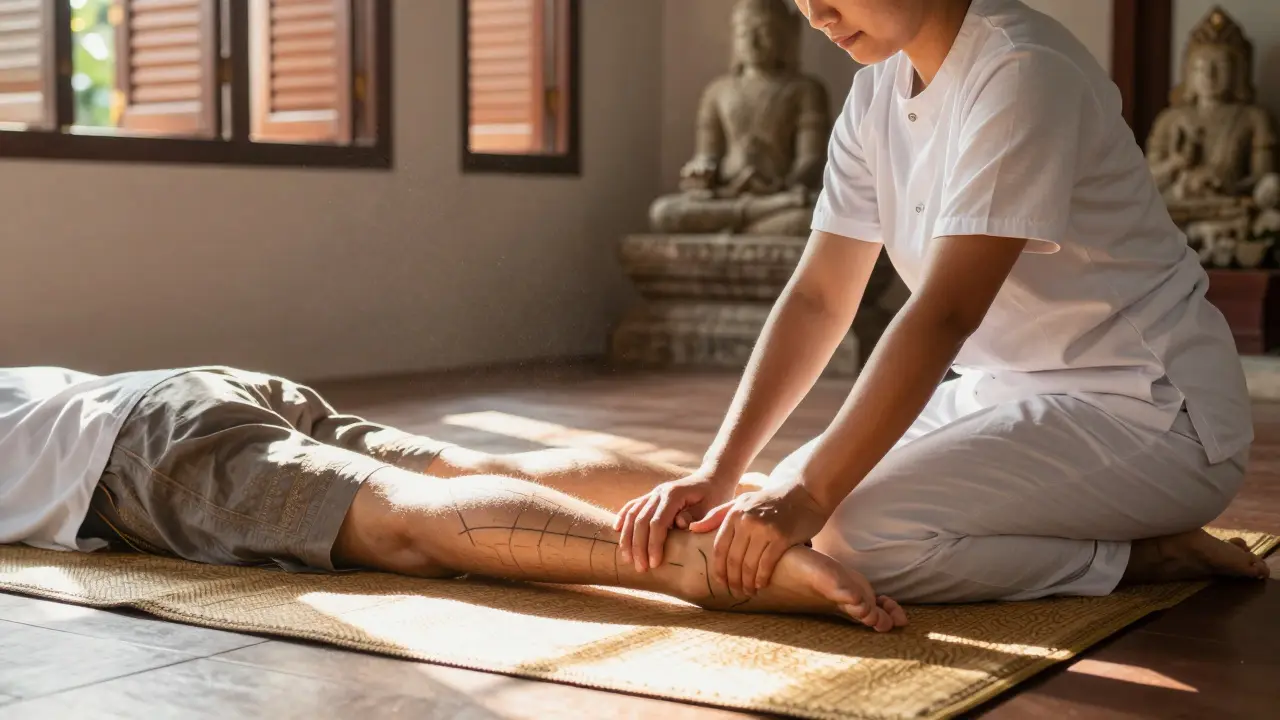
Thai massage isn’t just another type of bodywork. It’s a living tradition that’s been passed down for over 2,500 years-no machines, no oils, no quiet rooms with soft music. Instead, it’s full-body stretching, rhythmic compression, and pressure applied along invisible energy lines, all while you’re fully clothed. If you’ve ever tried it, you know it feels unlike anything else. If you haven’t, you might be wondering how someone can stretch you like a yoga mat and still call it a massage.
What Makes Thai Massage Different?
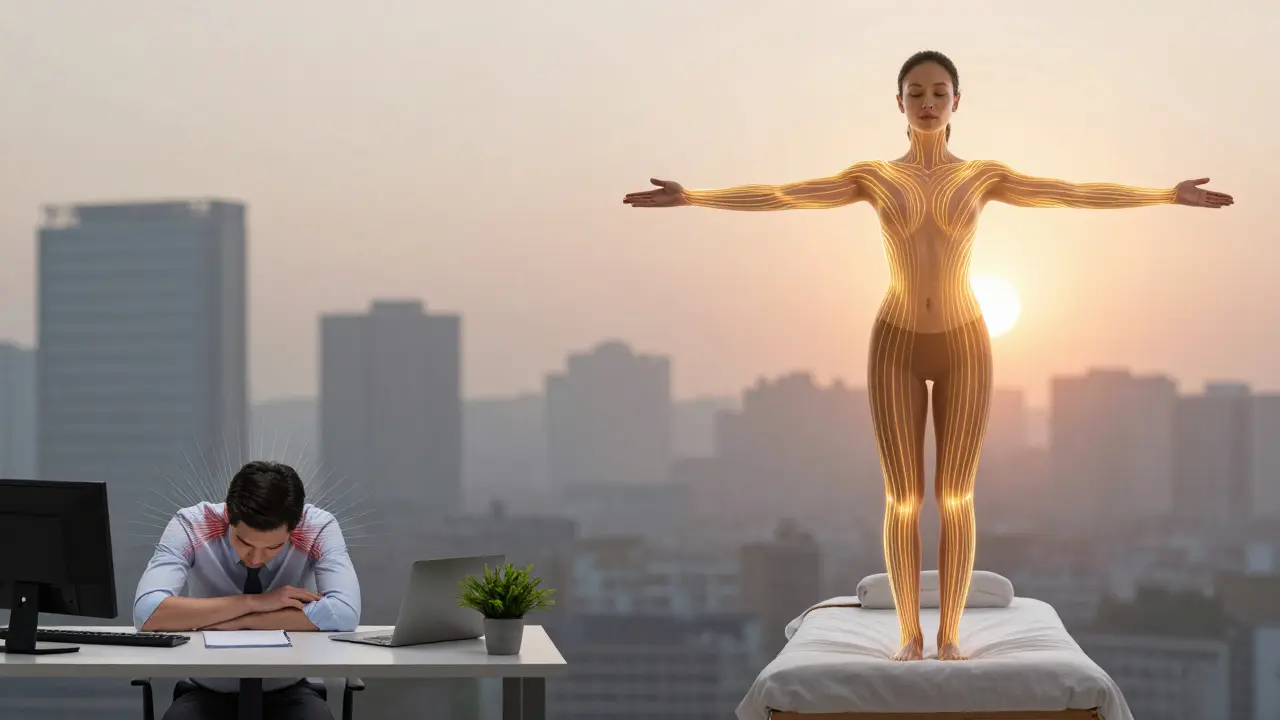
Most massages focus on muscles. Thai massage works on the body’s energy system. Practitioners follow ten main lines called sen lines, believed to carry life energy-similar to meridians in Chinese medicine. These lines run from your toes to your head, and when they’re blocked, you feel stiff, tired, or even emotionally heavy. The therapist doesn’t just rub sore spots. They use their hands, thumbs, elbows, knees, and even feet to apply pressure along these lines, then guide your body into deep, controlled stretches.
Think of it like yoga, but someone else is moving you. You don’t have to be flexible. In fact, many people come because they’re not flexible at all. The therapist adjusts the intensity based on your comfort. It’s not about forcing you into a pose-it’s about gently opening what’s tight.
The Origins: More Than Just a Massage
Thai massage traces back to Jivaka Komarabhacca, a physician and contemporary of the Buddha. He’s considered the father of Thai medicine and is said to have blended Indian Ayurveda, Chinese energy principles, and local healing traditions. For centuries, it was practiced in temples by monks who treated both physical pain and spiritual imbalance. It wasn’t a luxury. It was healthcare.
Today, you’ll find Thai massage in Bangkok alleyways, beach resorts in Phuket, and wellness centers in Melbourne. But even in modern settings, the core remains unchanged: movement, breath, and intention. The therapist works with rhythm-not speed. Each press and stretch is timed with your breathing. That’s why people often say they feel calmer after a session, even if they were sore during it.
What Happens During a Session?
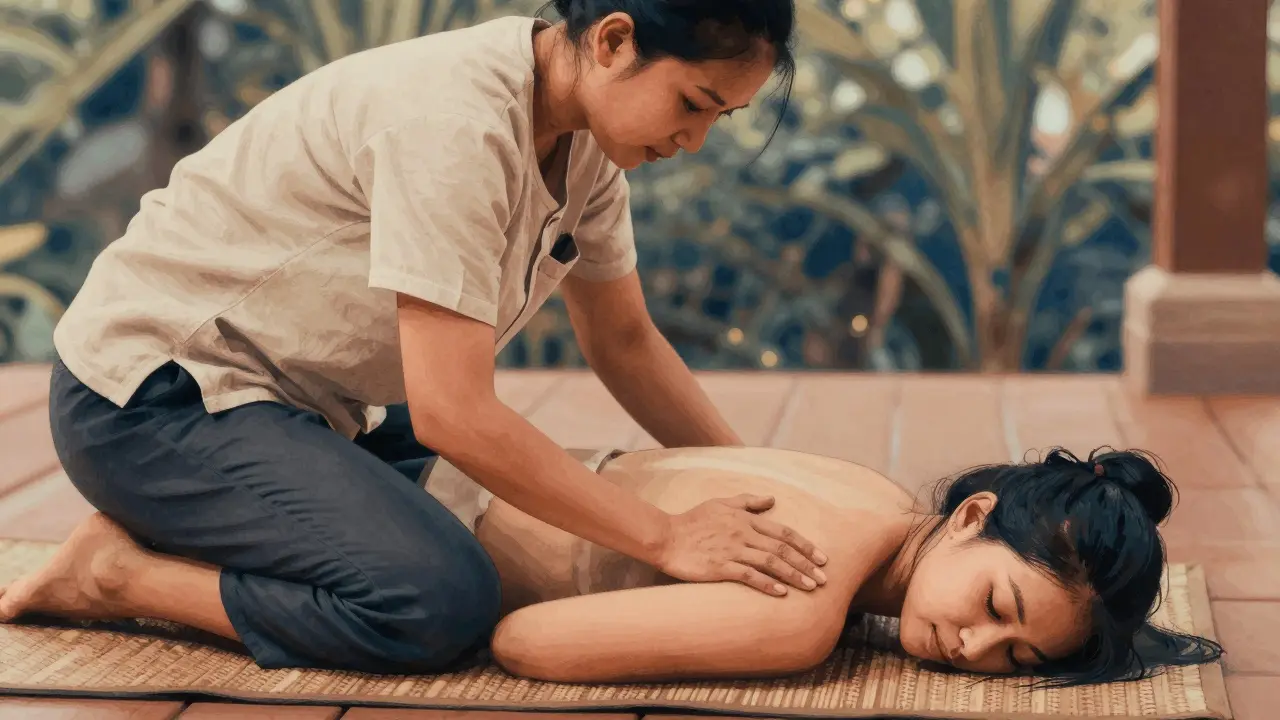
You lie on a mat on the floor, wearing loose, comfortable clothes. No sheets, no undressing. The therapist starts at your feet and moves upward. They’ll use their thumbs to press along the soles of your feet-sometimes hard enough to make you gasp, then soften just as you tense up. Next, they’ll gently pull your legs toward your chest, rotate your hips, and stretch your spine like a spring.
Don’t expect to be passive. You’ll be asked to breathe deeply and sometimes help by pushing gently against their hands. It’s a collaboration. You’re not being worked on-you’re working with someone who knows how to guide your body into release.
One common sequence is the “foot-to-head” flow: pressing the soles, stretching the calves, opening the hamstrings, twisting the torso, mobilizing the shoulders, and finally working the neck and head. It takes 60 to 90 minutes. By the end, your body feels both deeply relaxed and strangely energized-like you’ve slept for ten hours but also just finished a good workout.
Who Benefits Most?
People with chronic lower back pain often find relief. The deep stretches release tension in the hips and pelvis, which are common sources of back strain. Athletes use it to improve flexibility and prevent injuries. Office workers who sit all day say it fixes their hunched posture faster than any chiropractor visit.
It’s also surprisingly helpful for stress and anxiety. The rhythmic pressure and guided breathing activate the parasympathetic nervous system-the part of your body that says, “It’s safe to relax.” One 2023 study from Chiang Mai University found that participants who received weekly Thai massage for six weeks reported a 41% drop in cortisol levels and improved sleep quality.
But it’s not for everyone. If you have osteoporosis, recent fractures, or severe joint replacements, you should talk to your doctor first. The stretches can be intense, and while therapists are trained to adapt, some bodies just aren’t built for this kind of movement.
How to Find a Good Practitioner
Not every place that says “Thai massage” does it right. Some salons just call it that to sound exotic. A real Thai massage therapist has trained for hundreds of hours-often in Thailand-at schools like the Wat Pho Traditional Thai Massage School in Bangkok, which has been teaching since 1955.
In Melbourne, look for therapists who mention their training background. Ask where they learned and how long they trained. A good one will explain the sen lines, not just say they “do deep tissue.” They’ll also check in with you during the session: “Is this too much?” “Can you breathe here?”
Avoid places that rush you. A proper session isn’t a 30-minute deal. And if they use oils or play loud spa music, it’s probably not authentic Thai massage-it’s a hybrid.
What to Expect After
You might feel sore the next day. That’s normal. Your muscles have been stretched in ways they haven’t felt in years. Drink water. Move gently. Don’t go straight to the gym.
Some people feel a wave of emotion after their first session-sadness, laughter, even tears. That’s not rare. Thai massage releases not just physical tension but stored emotional stress. Your body holds trauma in its connective tissue. When it opens, sometimes feelings come with it.
Most people notice better posture, easier breathing, and fewer headaches within a few sessions. After a month of weekly treatments, many say they sleep deeper, move without pain, and feel more grounded. It’s not magic. It’s mechanics-ancient, effective, and deeply human.
Why It Still Works Today
In a world of apps, AI, and high-tech treatments, Thai massage survives because it doesn’t need technology. It needs presence. The therapist must be fully there-focused, calm, and attuned to your body’s signals. You have to be there too. No phones. No distractions.
It’s a rare kind of therapy where the most powerful tool isn’t a machine or a cream-it’s human touch guided by centuries of wisdom. And in a time when so much feels disconnected, that kind of connection is healing in itself.
Is Thai massage painful?
It can be intense, but it shouldn’t hurt. A good therapist adjusts pressure based on your feedback. If you feel sharp pain, speak up. The goal is deep release, not discomfort. Some areas might feel tender, especially if you’re tight, but pain means you’re resisting-relaxing into it makes the session more effective.
Do I need to be flexible to try Thai massage?
No. In fact, most people who come are the least flexible. The therapist works with your current range of motion. You’ll be guided slowly into stretches, never forced. Over time, your flexibility improves naturally because the body learns to release tension without fighting.
How often should I get Thai massage?
For general wellness, once a month is enough. If you have chronic pain, stress, or an active lifestyle, once a week for 4-6 weeks can make a big difference. After that, you can switch to maintenance sessions every 2-4 weeks. Listen to your body-if you feel stiff or tired again, it’s time.
Can Thai massage help with migraines?
Yes, for some people. The pressure on the neck, shoulders, and head helps release tension that triggers tension headaches and migraines. One small 2022 trial found that participants who received Thai massage twice a week for eight weeks had 30% fewer migraine days. It doesn’t work for everyone, but it’s worth trying if medications aren’t helping.
What’s the difference between Thai massage and Swedish massage?
Swedish massage uses oils, is done on a table, and focuses on relaxation through long strokes and kneading. Thai massage is done on a mat, fully clothed, with no oils. It’s more active-stretching, compression, and energy line work. Swedish is soothing. Thai massage is transformative.
Can I do Thai massage at home?
You can stretch and self-massage parts of your body, but you can’t replicate a full Thai session alone. The stretches require leverage and pressure you can’t apply to yourself effectively. Even simple moves like hip openers or spinal twists are much deeper with a trained partner. Start with a few sessions from a pro, then learn basic techniques to maintain the benefits.