
Imagine carrying a heavy backpack every day for months. You don't notice the weight at first, but eventually, your shoulders slump, your neck stiffens, and a dull ache settles in your lower back. That is what chronic muscle tension feels like. It is not just an annoyance; it is a physical barrier to living comfortably. Deep tissue massage is a therapeutic technique that targets the inner layers of muscles and connective tissues to break down adhesions and restore mobility. Unlike a gentle relaxation rub, this approach digs deeper to solve the root cause of pain.
Many people confuse deep tissue massage with a painful experience reserved only for athletes or those recovering from major injuries. The truth is more nuanced. While it involves firm pressure, the goal is never to hurt you. Instead, it aims to release chronic patterns of tension that build up over time due to poor posture, repetitive movements, or stress. Understanding how it works helps you decide if it is right for your body.
How Deep Tissue Massage Works
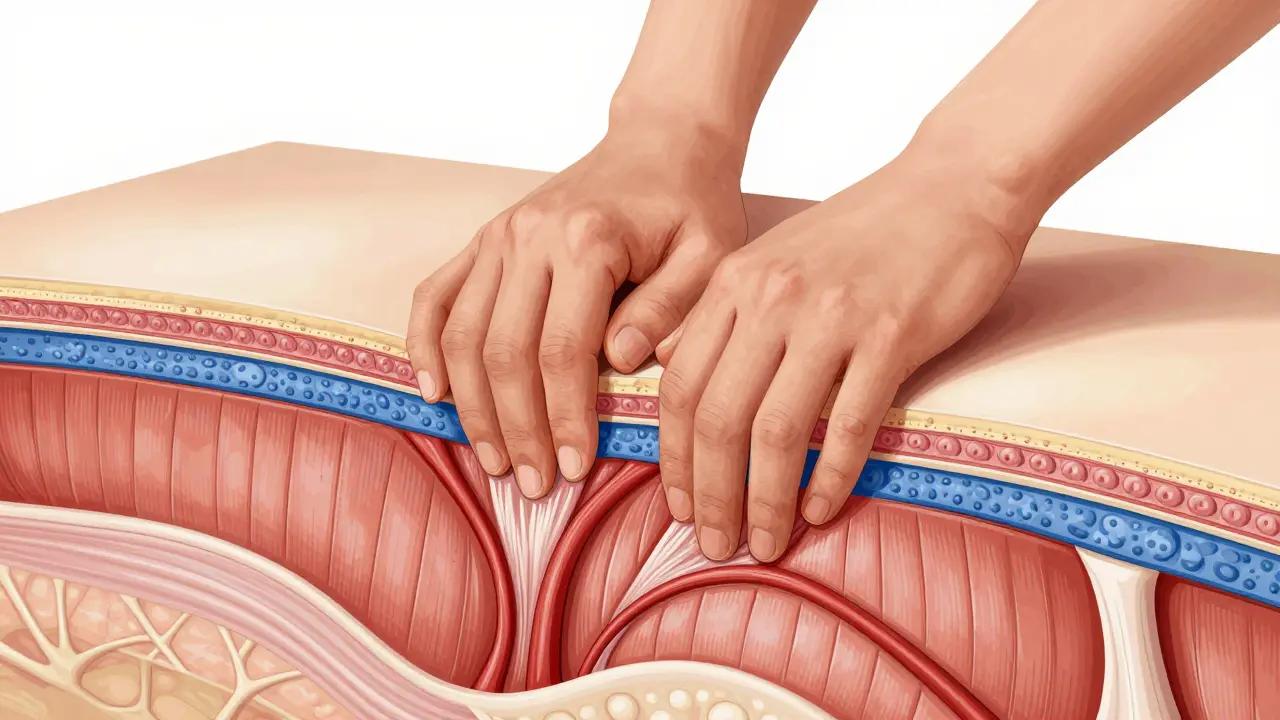
To understand why this method is effective, you need to look at what happens under the skin. Your muscles are wrapped in a sheath called fascia, which is a dense, fibrous connective tissue that surrounds muscles, bones, nerves, and blood vessels. When you get injured or maintain poor posture for long periods, this fascia can become sticky and tight. These areas of restriction are often referred to as adhesions.
A standard Swedish massage focuses on the superficial layer of muscles to promote general relaxation and improve circulation. Deep tissue massage, however, uses slow strokes and deep finger pressure to reach these deeper layers. The therapist works parallel to the grain of the muscle fibers. This specific direction helps stretch and align the collagen fibers within the fascia, breaking up the adhesions that cause pain and limited range of motion.
The process stimulates the nervous system differently than lighter massages. It encourages the body to release endorphins, which are natural painkillers. At the same time, it reduces the production of cortisol, the stress hormone. This combination helps calm the inflammatory response in the body, allowing healing to begin.
Who Benefits Most from Deep Tissue Massage?
This technique is not one-size-fits-all. It is particularly effective for specific groups of people who deal with consistent physical demands or chronic discomfort. Here is who typically sees the best results:
- Chronic Pain Sufferers: Individuals dealing with long-term issues like lower back pain, neck stiffness, or arthritis often find relief. The pressure helps loosen tight joints and reduce inflammation around them.
- Athletes and Active People: Runners, cyclists, and weightlifters develop tightness in specific muscle groups due to repetitive motion. Deep tissue work helps prevent injury by keeping muscles flexible and balanced.
- Office Workers: Sitting at a desk all day creates "tech neck" and rounded shoulders. Targeted pressure on the upper trapezius and levator scapulae muscles can reverse some of these postural damages.
- People Recovering from Injury: After a sprain or strain, scar tissue forms. Deep tissue massage can help remodel this tissue so it integrates better with healthy muscle, improving function.
If you have acute injuries, such as a fresh tear or severe bruising, deep tissue massage might be too aggressive. In those cases, lighter modalities like Swedish massage or rest are usually recommended until the initial inflammation subsides.
The Difference Between Deep Tissue and Other Massages
It is easy to mix up different massage styles because they share some techniques. However, the intent and execution differ significantly. Let’s compare deep tissue massage with two other common types.
| Feature | Deep Tissue Massage | Swedish Massage | Sports Massage |
|---|---|---|---|
| Pressure Level | Firm to very firm | Light to medium | Varies (pre-event vs. recovery) |
| Primary Goal | Break down adhesions and chronic tension | Relaxation and circulation | Performance enhancement and injury prevention |
| Stroke Speed | Slow | Fast to moderate | Fast (pre-event) or slow (recovery) |
| Pain Level | Moderate discomfort is common | Minimal to none | Can be intense depending on focus |
| Best For | Chronic pain, postural issues | Stress relief, general wellness | Athletes, active individuals |
Notice that Sports massage overlaps with deep tissue techniques but is tailored specifically to athletic needs. A sports massage might include stretching and joint mobilization, whereas a standard deep tissue session focuses purely on soft tissue manipulation.
What to Expect During Your Session
Your first deep tissue massage will likely feel different from any other treatment you have had. Communication is key. Before the session starts, tell your therapist about your pain points. Show them exactly where it hurts and describe the sensation-is it sharp, dull, or burning?
During the massage, the therapist will use their knuckles, elbows, or forearms to apply pressure. They will move slowly along the muscle fiber. You may feel a sensation known as "good pain." This is a feeling of intense pressure that releases tension, followed by immediate relief. If the pain becomes sharp or unbearable, speak up immediately. Good pain should feel like a satisfying stretch, not like an injury.
After the session, you might feel sore for 24 to 48 hours. This is similar to the feeling after a good workout. It means the muscles were worked deeply. To mitigate this, drink plenty of water. Hydration helps flush out metabolic waste products released from the tissues during the massage.
Safety Considerations and Contraindications
While deep tissue massage is safe for most people, it is not suitable for everyone. Certain health conditions require caution or avoidance of deep pressure. Always disclose your medical history to your therapist.
You should avoid deep tissue massage if you have:
- Blood clotting disorders: Deep pressure could dislodge a clot.
- Osteoporosis: Fragile bones can fracture under deep pressure.
- Open wounds or infections: Pressure can spread infection or irritate open skin.
- Pregnancy: Certain positions and pressures are unsafe during pregnancy. Look for a prenatal specialist instead.
- Recent surgery: Wait until your doctor clears you for deep tissue work, usually several weeks after the procedure.
If you take blood thinners, inform your therapist. They may need to adjust their technique to avoid bruising.
Tips for Getting the Most Out of Your Massage
To maximize the benefits of deep tissue massage, preparation and aftercare matter just as much as the session itself. Here are some practical tips:
- Hydrate before and after: Drink a glass of water an hour before your appointment and another immediately after. Dehydrated muscles are tighter and more prone to soreness.
- Wear loose clothing: Come dressed in comfortable clothes that do not restrict movement. This makes it easier to get on and off the table.
- Communicate openly: Do not endure unnecessary pain. Use a scale of 1 to 10 to rate the pressure. Aim for a 6 or 7-firm enough to be effective, but not so hard that you tense up.
- Book regular sessions: Deep tissue massage is cumulative. One session provides temporary relief, but weekly or bi-weekly sessions create lasting changes in muscle structure.
- Combine with other therapies: Pairing massage with yoga or stretching exercises can enhance flexibility and prolong the benefits.

The Science Behind the Relief
Why does pressing on a knot make it go away? Research suggests that deep pressure triggers the gate control theory of pain. This theory posits that non-painful input, such as touch or pressure, closes the "gates" to painful input, preventing pain signals from traveling through the nervous system to the brain.
Additionally, studies have shown that deep tissue massage increases blood flow to the affected area. Improved circulation delivers oxygen and nutrients to damaged tissues while removing waste products like lactic acid. This environment promotes faster healing and reduces inflammation.
Another factor is the release of serotonin and dopamine. These neurotransmitters improve mood and reduce anxiety. For many people, the mental relief is just as valuable as the physical relief.
Finding a Qualified Therapist
Not all massage therapists are trained in deep tissue techniques. When looking for a provider, check their credentials. Look for certifications from recognized bodies, such as the American Massage Therapy Association (AMTA) or equivalent organizations in your country.
Ask potential therapists about their experience with deep tissue work. A good therapist will ask detailed questions about your pain and medical history before starting. They should also explain their approach and set realistic expectations for your treatment plan.
In Melbourne, Australia, and elsewhere, many clinics offer specialized deep tissue services. Read reviews and perhaps schedule a consultation call to ensure the therapist’s style matches your comfort level and goals.
Is Deep Tissue Massage Right for You?
If you suffer from chronic muscle tension, poor posture, or recurring injuries, deep tissue massage could be a game-changer. It requires patience and communication, but the rewards are significant. You gain not just pain relief, but improved mobility and a greater sense of bodily awareness.
Start with a single session to see how your body responds. Pay attention to how you feel in the days following the treatment. If you experience lasting relief and reduced stiffness, consider making it a regular part of your health routine. Your muscles will thank you.
Does deep tissue massage hurt?
It can be uncomfortable, but it should not be excruciating. You may feel a "good pain," which is a sensation of intense pressure releasing tension. If the pain is sharp or causes you to flinch, tell your therapist to lighten the pressure. Effective deep tissue work balances intensity with tolerance.
How often should I get a deep tissue massage?
For chronic issues, weekly sessions are ideal initially. As your symptoms improve, you can space them out to every two or three weeks. Maintenance sessions once a month can help prevent tension from building up again. Consistency is key to long-term results.
What should I wear to a deep tissue massage?
Wear loose, comfortable clothing that allows easy access to the areas being treated. Many people prefer shorts and a tank top. You will be undressed to your comfort level and draped with sheets or towels during the session to maintain modesty and warmth.
Can deep tissue massage help with headaches?
Yes, especially tension headaches caused by tight neck and shoulder muscles. By releasing trigger points in the trapezius and suboccipital muscles, deep tissue massage can reduce the frequency and intensity of headaches. It addresses the muscular root cause rather than just masking the pain.
Why do I feel tired after a deep tissue massage?
Fatigue is a common side effect. The process of breaking down adhesions and releasing toxins into the bloodstream requires energy. Additionally, the relaxation response triggered by the massage can leave you feeling drowsy. Resting for a few hours after your session is recommended.
Is deep tissue massage safe for seniors?
It can be, but with caution. Seniors often have thinner skin and more fragile bones due to conditions like osteoporosis. A skilled therapist will modify their technique, using gentler pressure and avoiding bony prominences. Always consult with a healthcare provider before starting new treatments.