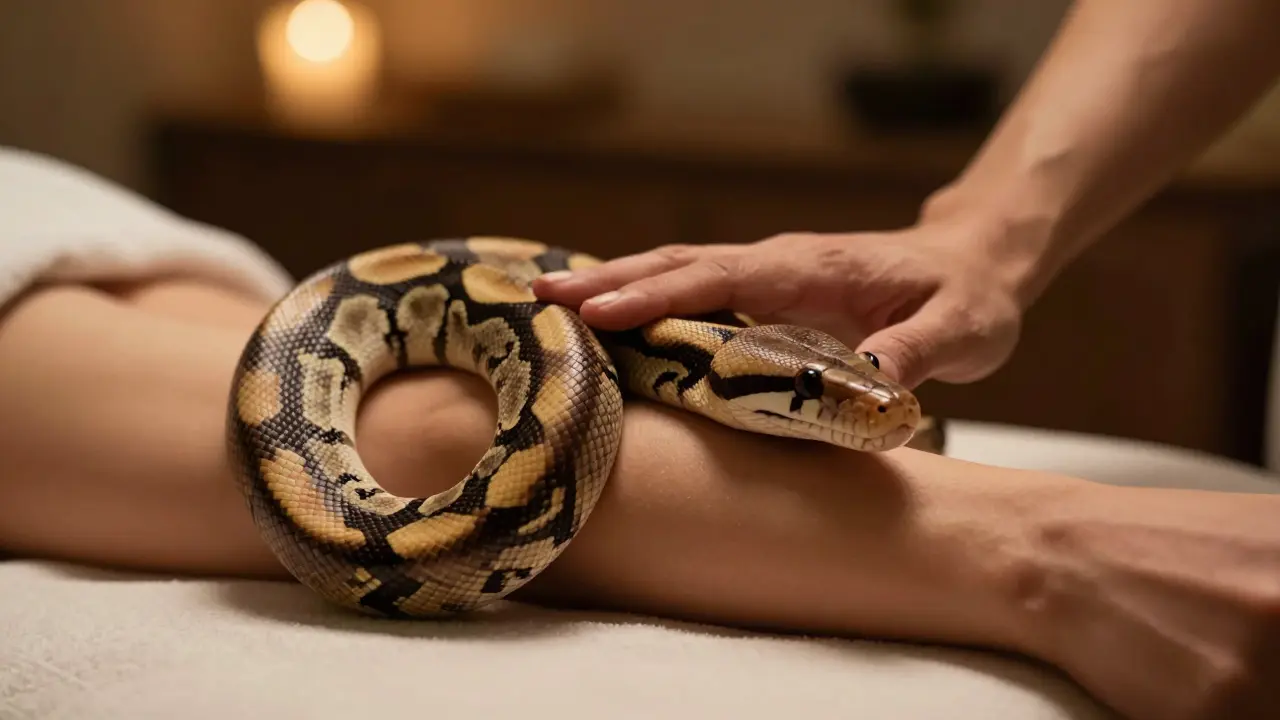
You lie on the table. The room is dimly lit. Then, you feel it: a cool, smooth weight sliding across your chest. It’s not a weighted blanket. It’s a snake, specifically a docile species like a ball python or corn snake, moving slowly over your skin. This is snake massage, also known as serpentotherapy or reptile therapy. It sounds like something out of a horror movie, but for thousands of people worldwide, it’s the ultimate stress reliever. Is it just a gimmick designed to sell Instagram photos? Or is there actual science behind why having a reptile crawl on you might lower your blood pressure?
The short answer is that it’s a bit of both. While the marketing often leans heavily into the novelty factor, the physiological effects are real. However, before you book a session, you need to understand exactly what happens to your body, the strict safety protocols required, and whether this exotic treatment is right for you.
The Physiology of Calm: Why It Works
When most people hear "snake," their immediate reaction is fear. Adrenaline spikes. Heart rate increases. But in a controlled therapeutic setting, the goal is the exact opposite. The practice relies on a concept called paradoxical relaxation. By exposing yourself to a controlled source of mild anxiety (the snake), your brain is forced to recalibrate. When you realize the animal is harmless and its movements are rhythmic and slow, your nervous system shifts from a sympathetic state (fight or flight) to a parasympathetic state (rest and digest).
This isn't just theoretical. The physical presence of the snake provides two distinct stimuli:
- Deep Pressure Therapy: Snakes, particularly larger constrictors like pythons, have significant mass. As they coil around your limbs or torso, they apply gentle, consistent pressure. This mimics the effects of deep tissue massage, helping to release muscle tension without the pain associated with aggressive human hands.
- Thermal Regulation: Reptiles are ectothermic, meaning they rely on external sources for heat. In a warm spa environment, snakes seek out warmth. Their bodies can be slightly cooler than human skin initially, providing a soothing contrast that can help reduce inflammation and numb minor aches.
Studies on animal-assisted therapy generally show a decrease in cortisol levels and an increase in oxytocin. While specific peer-reviewed studies on *snake* massage are scarce due to the niche nature of the practice, the principles align with broader findings in zootherapy. The unique texture of snake scales-smooth yet structured-also provides a novel tactile sensation that distracts the mind from chronic pain or mental rumination.
Safety First: Not All Snakes Are Created Equal
If you are considering this treatment, the first thing you must verify is the type of snake used. Professional therapists never use venomous species. Ever. The animals used are almost exclusively non-venomous constrictors or colubrids known for their docile temperaments.
| Species | Temperament | Size Range | Best For |
|---|---|---|---|
| Ball Python | Docile, shy | 3-5 feet | Localized pressure, arm/leg massage |
| Corn Snake | Gentle, curious | 3-4 feet | Full body coverage, beginners |
| Reticulated Python | Calm, heavy | 10-15+ feet | Deep pressure, full-body wrapping |
| King Snake | Active, smooth | 2-4 feet | Tactile stimulation, back massage |
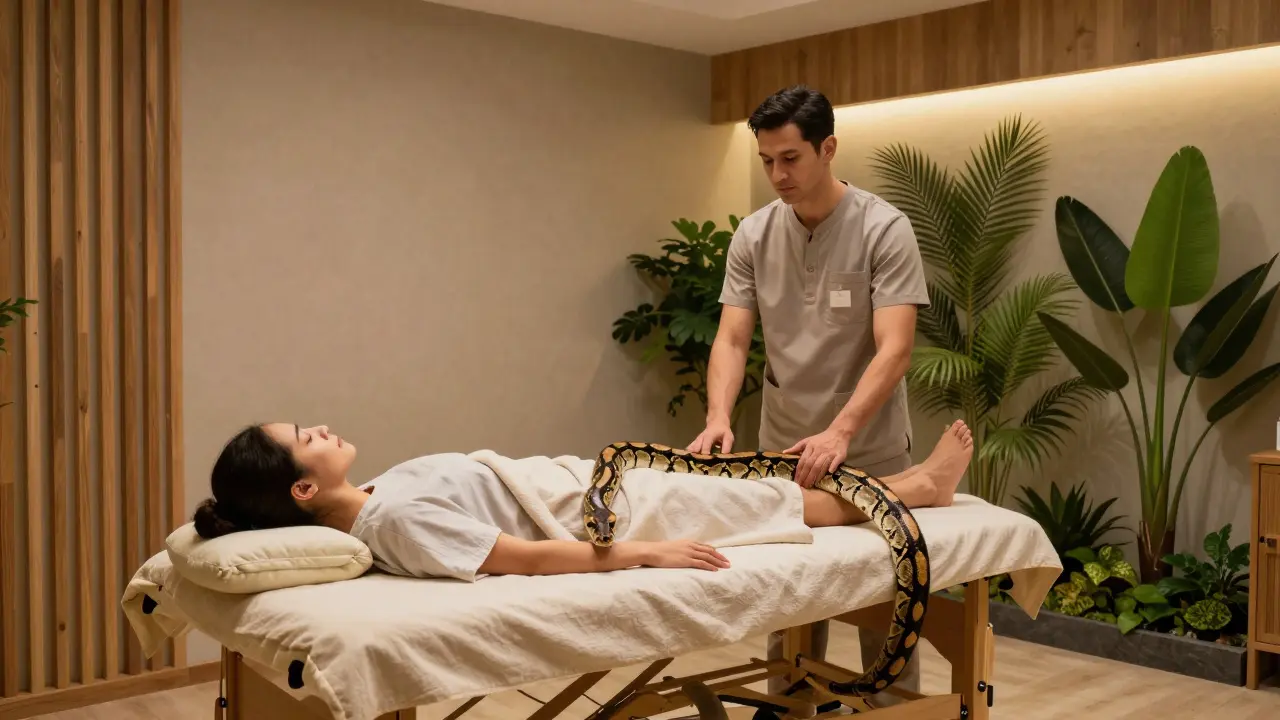
The therapist acts as a handler, guiding the snake gently across your body. They do not force the animal; if the snake becomes stressed, it will stop moving or retreat. A reputable facility will prioritize the welfare of the reptile above all else. If the snake doesn’t want to participate, the session ends. This respect for the animal’s autonomy is crucial because a stressed snake may bite, even if it lacks venom.
Hygiene is another critical factor. Snakes shed their skin regularly, and while this is natural, it can carry bacteria. Professional spas use disposable barriers or thoroughly sanitized towels between clients. Some facilities allow direct skin contact, while others require you to wear light clothing. Always ask about their cleaning protocol before booking.
Who Should Avoid Snake Massage?
Despite its benefits, this therapy is not suitable for everyone. Here are the primary groups who should steer clear:
- People with Ophidiophobia: If you have a severe phobia of snakes, this treatment could trigger a panic attack rather than relaxation. Exposure therapy requires gradual desensitization under professional guidance, not a spa visit.
- Pregnant Women: While the pressure is gentle, the risk of accidental movement or stress-induced contractions makes this an unsafe choice during pregnancy.
- Immunocompromised Individuals: Reptiles can carry Salmonella. Even with good hygiene, the risk of bacterial transmission is higher for those with weakened immune systems.
- People with Open Wounds: Direct contact with any animal over broken skin increases infection risk.
The Ethical Debate: Exploitation vs. Education
A growing concern in the wellness community is the ethical treatment of animals used in these therapies. Critics argue that using wild or captive-bred animals for human entertainment crosses a line. Proponents counter that responsible breeders and sanctuaries use these sessions to fund care for orphaned or injured reptiles, promoting education and conservation.
To ensure you’re supporting ethical practices, look for facilities that:
- Provide detailed information about the origin of their animals.
- Limit session times to prevent animal fatigue.
- Employ certified herpetologists or trained handlers.
- Do not force interactions if the animal shows signs of stress.
If a spa cannot answer these questions confidently, walk away. The trend has led to unregulated pop-up events where animal welfare is secondary to profit. Supporting established, transparent businesses helps keep the industry accountable.
What to Expect During Your Session
Walking into a snake massage appointment can be intimidating. Here’s a step-by-step breakdown of what typically happens:
- Consultation: The therapist will discuss your health history, fears, and comfort level. You’ll sign a waiver acknowledging the risks.
- Preparation: You’ll change into comfortable clothing or lay down on a clean sheet. The room temperature is usually kept warm (around 80°F / 27°C) to keep the snakes active and comfortable.
- Introduction: The handler introduces the snake, allowing you to touch it briefly before it goes onto your body. This builds trust and reduces anxiety.
- The Massage: The snake moves across your chosen areas (back, legs, arms). The session lasts 15-30 minutes. You remain still, breathing deeply.
- Aftercare: You wash your hands thoroughly. The therapist monitors you for any allergic reactions or lingering anxiety.
The cost varies widely, ranging from $50 to $150 per session depending on location and the size of the snake. It’s significantly more expensive than a standard Swedish massage, so view it as a specialized experience rather than a routine maintenance treatment.
Is It Worth the Hype?
Serpentotherapy is not a cure-all. It won’t fix chronic back pain better than a skilled chiropractor, nor will it replace psychotherapy for anxiety disorders. However, as a one-off experience to break through high-stress plateaus, it offers a unique combination of sensory distraction, deep pressure, and psychological triumph over fear.
The key is managing expectations. If you go in expecting a magical healing ritual, you may be disappointed. If you approach it as a fascinating, safe, and unusual way to disconnect from digital noise and reconnect with primal calm, you might find it genuinely transformative. Just make sure the handler knows their stuff, the snake looks healthy, and you feel completely in control throughout the process.
Does snake massage hurt?
No, snake massage should not hurt. The snakes used are non-venomous and docile. Their scales are smooth, and their movement is gentle. You may feel a strange sensation or slight pressure, but it should never be painful. If you feel sharp pain, inform the therapist immediately.
Can snakes bite during a massage?
While rare, bites can happen if the snake feels threatened or stressed. Professional handlers minimize this risk by choosing calm animals and monitoring their behavior closely. Since only non-venomous snakes are used, a bite would result in minor puncture wounds but no life-threatening envenomation. Always choose a reputable facility with experienced handlers.
Is snake massage safe for pregnant women?
No, snake massage is generally not recommended for pregnant women. The stress response, even if mild, combined with the physical pressure and potential hygiene risks, makes it an unsafe choice during pregnancy. Consult your healthcare provider before trying any new alternative therapy.
How much does a snake massage cost?
Prices vary by location and provider, but typically range from $50 to $150 for a 30-minute session. Luxury spas or those using large reticulated pythons may charge more. It is considered a premium, niche service compared to traditional massage therapies.
Do I need to be afraid of snakes to benefit?
Not necessarily. While overcoming ophidiophobia (fear of snakes) can provide a significant psychological boost, many people enjoy the treatment purely for the physical sensations and novelty. The calming effect comes from the rhythmic movement and deep pressure, which can benefit anyone seeking relaxation.